


Best AI financing Tools to assist your investment.
AI financing tools can make investing faster, more organized, and easier to research. In this guide, “AI financing tools” means AI-powered platforms that help with market screening, portfolio analysis, idea generation, risk checks, and trade automation. These tools matter because most investors do not have time to manually review every stock, fund, or market signal. They are useful for beginners, self-directed investors, freelancers, small business owners, and professionals who want smarter investment research without drowning in data.
Direct Answer
The best AI financing tools to assist your investment are platforms that combine market research, portfolio monitoring, screening, and automation in one workflow. The right choice depends on your goal: research-first tools help with analysis, trading tools help with execution, and portfolio tools help with risk management. AI can improve speed and clarity, but it should support your decision-making rather than replace it.
Key Takeaways
- AI financing tools help investors research markets, scan opportunities, and monitor portfolios more efficiently.
- The best tools are the ones that match your investing style, whether you focus on long-term investing, active trading, or portfolio tracking.
- Good AI tools improve organization and insight, but they do not guarantee returns.
- Beginners should look for simple interfaces, clear explanations, and transparent data sources.
- Developers and advanced users may prefer API-based or automation-focused platforms.
- Always verify pricing, features, and availability on the official website before subscribing.
What Is Best AI financing Tools to assist your investment.?
Best AI financing tools to assist your investment are software platforms that use artificial intelligence to analyze financial data and support investing decisions. They may search for stocks, summarize market trends, track portfolio performance, spot patterns, or automate actions through integrations and APIs.
For beginners, the biggest problem these tools solve is information overload. The market produces too much data for one person to review manually. AI tools can narrow that data into useful signals, such as watchlist alerts, valuation summaries, or risk notes.
People use them to save time, reduce manual work, and make more informed investment decisions. However, they are still tools, not decision-makers. A strong investing process still requires judgment, diversification, and risk control.
How It Works
AI financing tools usually follow a simple workflow:
- Collect data
The platform pulls in market prices, company fundamentals, news, charts, filings, and sometimes portfolio data. - Analyze patterns
AI models scan the data for trends, correlations, momentum shifts, valuation gaps, or unusual activity. - Present insights
Instead of showing raw numbers only, the tool summarizes what may matter most. This can include ranked ideas, alerts, or plain-language explanations. - Support decisions
You can use the output to compare assets, review risk, and decide whether an investment fits your goals. - Automate selected tasks
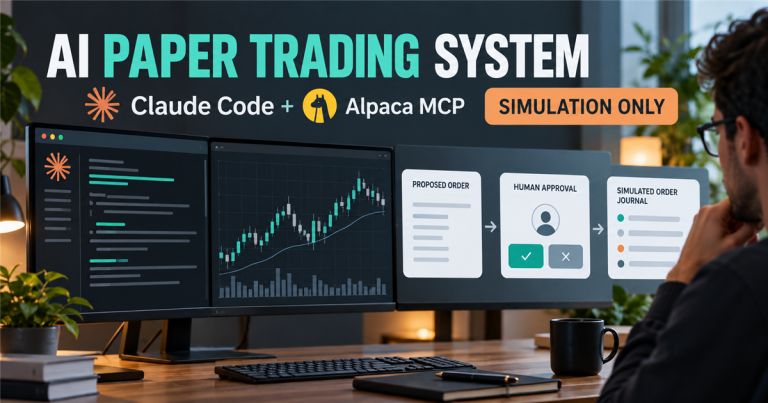
Some tools can connect to brokerages, trigger alerts, rebalance portfolios, or support algorithmic trading through APIs.
The key point is that AI speeds up analysis. It does not eliminate the need to check assumptions, verify sources, and consider market risk.
Key Features
Natural-language research
Some of the best AI financing tools let you ask questions in plain English, such as “Which stocks in healthcare look undervalued?” or “Show me my highest-risk holdings.” This matters because it lowers the barrier for beginners and saves time for experienced investors.
A natural-language interface can make financial research more approachable, especially when compared with complex filters or spreadsheets.
Portfolio analysis and risk monitoring
Strong tools do more than find ideas. They also help you understand what you already own. Portfolio analysis can highlight concentration risk, sector exposure, volatility, or overlapping holdings.
This is useful for long-term investors who want to avoid being too dependent on one stock, one industry, or one market theme. AI can make portfolio review more frequent and less manual.
Screening, alerts, and automation
Screening helps you find investments that match specific rules, such as market cap, valuation, or momentum. Alerts notify you when something changes. Automation goes further by connecting to brokers or APIs to support systematic strategies.
This feature is especially valuable for active investors and developers. It can reduce missed opportunities and improve consistency, but it also requires discipline and careful setup.
Pricing
Pricing for AI financing tools varies widely. Some platforms offer limited free access, some use monthly subscriptions, and others focus on enterprise or custom pricing. Features may also differ by region, account type, or platform tier.
Pricing may change over time, so readers should check the official website for the latest details.
Before subscribing, compare what is included in the plan. A tool may look affordable at first but charge extra for advanced screening, data exports, API access, or advisor-level features. If you are only starting out, a simple plan may be enough. Advanced users should look for flexibility and data depth.
Pros and Cons
Pros
- They save time by summarizing large amounts of financial data.
- They can improve portfolio visibility and highlight risk faster than manual review.
- They are useful for both beginners and advanced users, depending on the platform.
Cons
- They can be misleading if users trust outputs without checking the underlying data.
- Some platforms are subscription-based and may become expensive over time.
- No AI tool can remove market risk or guarantee better returns.
Who Should Use It?
AI financing tools are a strong fit for:
- Beginners who want simpler investing research
- Long-term investors who need portfolio monitoring
- Active traders who want screening and alerts
- Freelancers and small business owners managing personal capital
- Developers who want API-based automation
- Teams and advisors that need faster analysis and reporting
They may not be the best fit for people who want a fully hands-off experience, prefer traditional human advice only, or do not want to pay for subscriptions. They are also not ideal for anyone who expects AI to predict the market with certainty.
Alternatives
If you are comparing the best AI financing tools to assist your investment, these are realistic alternatives worth reviewing:
- Magnifi
Best use case: Conversational investing research and idea discovery.
Main difference: More focused on plain-language search and research than trading automation. - Koyfin
Best use case: Market dashboards, portfolio tracking, and financial research.
Main difference: Strong in analytics and visualization, with less emphasis on automated execution. - Tickeron
Best use case: Pattern-based investing and trading ideas.
Main difference: More geared toward AI signals and active trading-style insights. - Alpaca
Best use case: API-driven trading, automation, and developer workflows.
Main difference: More technical and infrastructure-focused than a beginner-friendly research tool. - Ziggma
Best use case: Portfolio analysis and stock screening for individual investors.
Main difference: Simpler and more portfolio-centered than a full trading platform.
| Tool | Best For | Main Strength | Limitation |
|---|---|---|---|
| Magnifi | Research-first investors | Natural-language investing search | Less suited to deep automation |
| Koyfin | Analysts and long-term investors | Visual dashboards and market data | Can feel more analytical than simple |
| Tickeron | Active traders | AI-driven signals and pattern ideas | May be too complex for beginners |
| Alpaca | Developers and quants | API-based automation | Requires technical setup |
| Ziggma | Personal portfolio tracking | Straightforward portfolio insights | Not a full-featured trading suite |
Techmixer Verdict
The best AI financing tools are the ones that help you make faster, clearer investment decisions without taking control away from you. For most readers, a research-focused platform or portfolio tracker is the best starting point. If you want automation, consider a tool with broker integration or API support. If you mainly want market ideas, a screening and signal platform may be a better fit. Before choosing, verify pricing, supported markets, data sources, and whether the tool matches your investing style. The best choice is usually the one you will actually use consistently.
FAQ
What are AI financing tools for investing?
AI financing tools for investing are platforms that use machine learning or automated analysis to support financial decisions. They may help with stock screening, portfolio review, market trend analysis, and alerts. These tools are designed to assist research and planning, not replace investor judgment or financial advice.
Can AI tools predict stock prices accurately?
No AI financing tool can predict stock prices with certainty. AI can identify patterns, estimate probabilities, and surface signals that may be useful for research. However, markets change quickly, and unexpected events can affect outcomes. Investors should treat AI output as one input, not a guarantee.
Are AI investing tools good for beginners?
Yes, many AI investing tools are helpful for beginners because they simplify research and reduce information overload. Tools with natural-language search, portfolio summaries, and clear dashboards are often the easiest to use. Beginners should still learn basic investing principles, diversification, and risk management before making decisions.
Which AI financing tool is best for portfolio analysis?
The best tool for portfolio analysis depends on how much detail you need. Some platforms focus on simple holding summaries, while others provide deeper analytics like risk exposure and sector concentration. Investors who mainly want to understand their current portfolio should choose a tool built around tracking and reporting.
Do AI financing tools replace financial advisors?
No, AI financing tools do not replace financial advisors. They can support research, organization, and monitoring, but they do not provide personalized fiduciary advice. A licensed advisor is still important for complex tax issues, retirement planning, estate planning, and major life decisions.
How do I choose the right AI investing tool?
Start by defining your goal. If you want research, choose a research-focused platform. If you want alerts, choose a screening tool. If you want automation, look for API or broker integration. Always review data quality, ease of use, pricing, and whether the tool matches your investing style.
Sources
- Magnifi: https://www.magnifi.com/
- Koyfin: https://www.koyfin.com/
- Tickeron: https://tickeron.com/
- Alpaca: https://alpaca.markets/
- Ziggma: https://www.ziggma.com/
- U.S. Securities and Exchange Commission Investor.gov: https://www.investor.gov/
- FINRA Investor Education: https://www.finra.org/investors
Pricing, features, and availability may change. Readers should verify the latest details on the official website.

The distinction between market screening, portfolio analysis, risk checks, and trade automation makes this guide especially practical. I also appreciate the reminder that AI tools can speed up research without replacing careful investment judgment.