AI Driven Zero Human Companies: The Future of Business Is Already Taking Shape
What would a company look like if it didn’t need people to make decisions, run operations, or even answer routine customer questions?
That sounds a little sci-fi at first. But the idea behind AI-driven companies is becoming much more practical, and a lot less futuristic, than people think. In fact, the conversation is shifting from “Can AI help businesses?” to “How much of a business can AI run on its own?”
That’s where the idea of zero human companies comes in.
Not literally zero humans in the world, of course. You still need people to design systems, set goals, handle exceptions, and decide what “good” looks like. But in a growing number of cases, AI can take over the day-to-day running of a business far more than most people expect. For startups and even larger companies, this opens the door to a new kind of future business AI model: one that is leaner, faster, and more autonomous than traditional businesses.
In this article, we’ll break down what AI-driven zero human companies actually mean, how they work, and why AI autonomous business models may become a serious part of the future.
What Are AI-Driven Zero Human Companies?
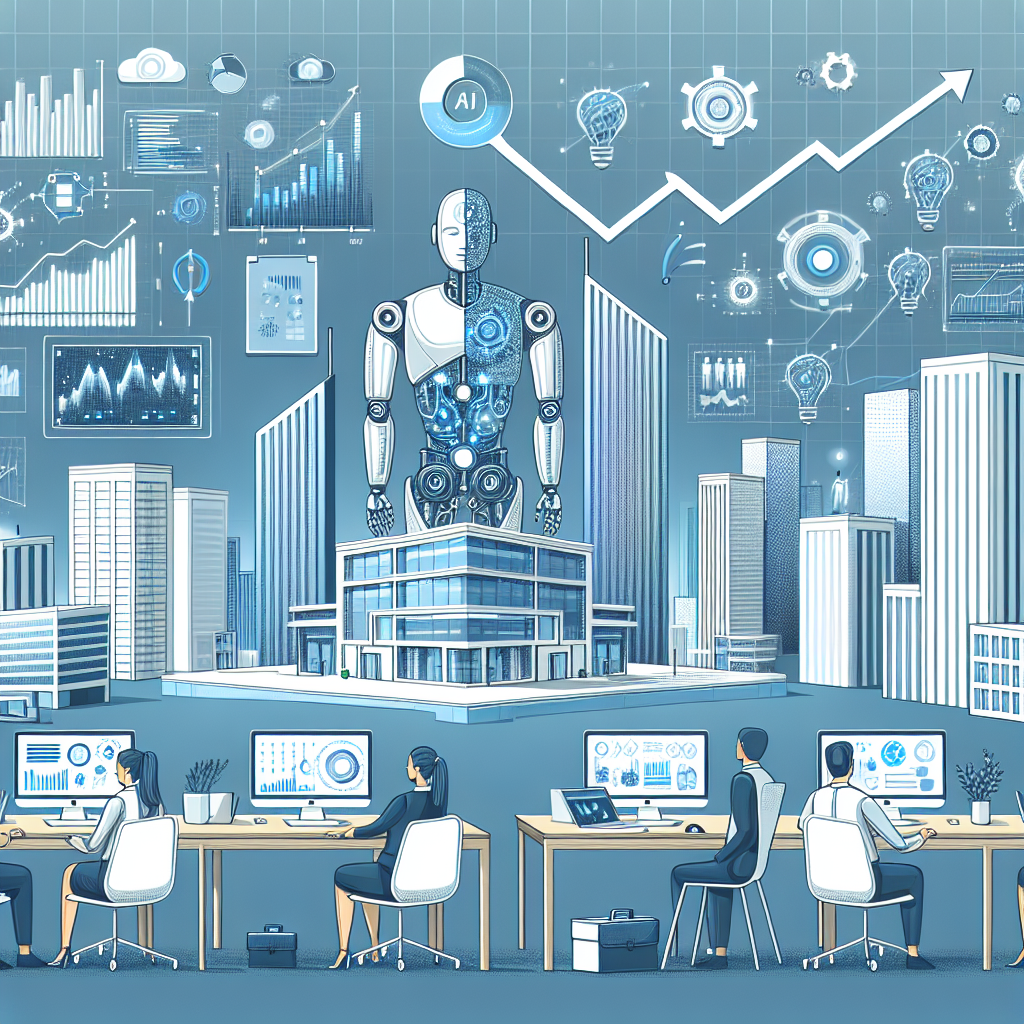
At a basic level, AI-driven companies are businesses where artificial intelligence handles major operational tasks that would normally require human input.
A zero human company takes that idea further. It aims to automate as much of the business as possible, including:
- decision-making
- customer support
- scheduling
- inventory management
- marketing optimization
- financial tracking
- internal workflows
The “zero human” part is a bit dramatic, honestly. Most real-world versions won’t be completely human-free. But they may become human-light, meaning a very small team oversees the AI systems rather than doing the work manually.
Think of it like a self-driving car for business operations.
You still set the destination. The AI handles the lane changes, speed adjustments, and route changes in real time.
Why the Idea of Future Business AI Is Gaining Momentum
A few years ago, this idea sounded like a fancy experiment. Now, it’s becoming a real business strategy.
Why? Mostly because AI has matured in three important ways:
1. It can make faster decisions
AI doesn’t get tired, distracted, or overwhelmed by too many tabs open. It can analyze data quickly and recommend actions almost instantly.
2. It can automate repetitive work
A lot of business tasks are repetitive. Think of data entry, lead routing, invoice matching, and FAQ responses. These are exactly the kinds of things AI does well.
3. It can connect across tools
Thanks to APIs and integrations, AI can interact with CRM systems, email platforms, payment systems, logistics software, and more. That means it’s not just “thinking.” It can actually do things.
This is why future business AI isn’t just about chatbots or content generation anymore. It’s about building companies that operate with a high level of machine-led coordination.
And yes, that changes the game.
The Core Components of an AI Autonomous Business
If you want to understand how AI run companies work, you need to look at the core pieces that hold the whole thing together.
These usually come down to three things:
- AI decision-making
- Automation workflows
- API integrations
Let’s unpack each one.
1. AI Decision-Making: The Brain of AI-Driven Companies
Decision-making is the heart of any business.
Traditionally, people make decisions based on experience, reports, meetings, and instinct. In AI-driven companies, that logic gets replaced or supported by systems that can process large amounts of data and recommend the next move.
How AI decision-making works
AI decision systems use inputs like:
- customer behavior
- sales data
- supply chain activity
- website analytics
- market trends
- historical performance
Then they apply rules, models, or machine learning to decide what action makes the most sense.
For example:
- If customer demand spikes, AI can increase inventory orders.
- If a sales lead shows strong intent, AI can prioritize follow-up.
- If a product underperforms, AI can adjust pricing or pause promotions.
This doesn’t always mean the AI is “thinking” like a human. It means it can recognize patterns and respond based on goals.
A real-world example
Imagine an online store selling skincare products.
An AI system notices that one item suddenly gets more traffic on Instagram and conversion rates rise. It can:
- increase ad spend on that product
- reorder stock
- update homepage placement
- trigger email campaigns
- notify the warehouse
All of that can happen without a manager manually checking five different dashboards.
That’s the appeal of AI autonomous business systems. They act quickly, based on data, not gut feeling.
The catch
Of course, AI decision-making is only as good as the data it receives.
If the inputs are messy, incomplete, or biased, the decisions can go wrong. So while AI can reduce human involvement, it doesn’t remove the need for human oversight completely.
At least not yet.
2. Automation Workflows: The Engine Behind Zero Human Companies
If AI decision-making is the brain, then automation workflows are the engine.
This is where decisions turn into action.
An automation workflow is a series of steps that happen automatically based on a trigger. In AI run companies, these workflows are what keep everything moving without someone constantly pressing buttons.
Common automation workflows in AI-driven companies
Here are a few examples:
- A new lead fills out a form ? AI scores the lead ? sends it to sales or nurture sequence
- A customer submits a support request ? AI detects the issue ? routes it to the right solution or bot
- Inventory drops below a threshold ? AI places an order ? updates the supplier
- An invoice is overdue ? AI sends reminders ? logs the payment status
- A campaign underperforms ? AI pauses it ? reallocates budget
These workflows reduce manual effort and keep businesses running even when no one is watching every detail.
Why workflows matter so much
A lot of businesses are not slowed down by “big problems.”
They’re slowed down by tiny, repeated tasks.
A team member forgets to follow up.
A report sits unread in an inbox.
A form gets submitted and nobody acts on it for two days.
These little delays add up.
Automation workflows solve that by turning routine actions into systems. And when AI is plugged into the workflow, it can also decide what should happen next based on context.
That’s the key difference between simple automation and intelligent automation.
Simple automation vs AI-powered automation
| Simple Automation | AI-Powered Automation |
|---|---|
| Follows fixed rules | Adapts based on data |
| Good for repetitive tasks | Good for dynamic decisions |
| Breaks when conditions change | Can adjust to new patterns |
| Requires more human setup | Can learn and improve over time |
This is one reason future business AI feels different from old-school automation. It’s not just “if this, then that.” It’s more like “if this changes, decide the best next step.”
3. API Integrations: The Nervous System of AI Run Companies
This part gets overlooked a lot, but it’s essential.
Even the smartest AI can’t do much if it’s trapped in one tool.
That’s where APIs come in.
An API, or application programming interface, lets different software systems talk to each other. In AI-driven companies, API integrations connect AI models to the tools that actually run the business.
What APIs do in AI autonomous business models
APIs can link AI to:
- CRM platforms
- payment processors
- email systems
- inventory software
- scheduling tools
- analytics dashboards
- customer support platforms
- accounting software
So instead of AI just suggesting actions, it can trigger real-world business operations.
Example: AI in a subscription business
Let’s say a customer’s payment fails.
An AI system can:
- detect the failed transaction through the payment API
- check the customer’s history
- decide whether to retry the charge or send a reminder
- update the CRM
- notify support if needed
- schedule a follow-up email
All without human involvement unless something unusual happens.
That’s the real power of API integrations. They let AI move from analysis to execution.
Why this matters for scalability
Without APIs, AI is just a smart assistant.
With APIs, AI becomes an operator.
That difference matters if you want to scale a business with fewer people. It’s one thing to have AI draft an email. It’s another thing entirely for AI to send it, track responses, update records, and follow up based on results.
That’s the direction AI run companies are heading.
What AI-Driven Companies Could Look Like in Practice
The phrase “zero human company” can sound extreme. But in some industries, the building blocks are already here.
Here are a few realistic examples.
1. A fully automated e-commerce brand
An AI autonomous business could manage:
- product research
- pricing changes
- ad optimization
- customer support
- inventory restocking
- review monitoring
A human founder might only step in for strategy, brand direction, or exception handling.
2. A digital service business
Imagine an AI-led agency that handles:
- lead qualification
- proposal creation
- scheduling
- project updates
- invoice follow-ups
The human side becomes more about overseeing quality and handling edge cases.
3. A software startup
AI could manage:
- bug triage
- user onboarding
- support ticket replies
- churn prediction
- usage analytics
- internal alerts
This doesn’t mean engineers disappear. But day-to-day operations can become much lighter.
4. A logistics operation
AI systems can optimize routes, manage stock, predict delays, and coordinate with vendors through APIs. That’s a huge win in a business where timing matters.
The Benefits of AI Autonomous Business Models
There’s a reason people are excited about AI-driven companies. The upside is real.
Faster decisions
AI can act in seconds, not days.
Lower operating costs
Fewer manual tasks means less time spent on repetitive work.
More consistency
Machines don’t forget steps or get distracted by Slack messages.
Better scalability
You can handle more customers, more transactions, and more data without adding the same number of people.
24/7 operations
AI doesn’t need sleep, breaks, or weekends.
For some businesses, this could be the difference between staying small and growing aggressively.
The Risks and Limitations No One Should Ignore
Now, to be fair, this isn’t all upside.
There are some real problems with the idea of zero human companies.
1. Bad decisions can scale fast
If an AI makes the wrong call, it can repeat that mistake across thousands of actions before anyone notices.
2. Context still matters
AI can miss nuance. It may not understand brand tone, emotional situations, or weird edge cases very well.
3. Data quality is everything
Bad data leads to bad outcomes. Simple as that.
4. Compliance and ethics are tricky
Businesses in finance, healthcare, and legal services have rules that AI can’t just ignore.
5. Customers still want humans sometimes
Even in a highly automated world, people often prefer to talk to a real person when money, trust, or frustration is involved.
So the smarter view isn’t “replace humans completely.”
It’s “use AI where it makes sense, and keep humans where judgment matters.”
That’s probably the more realistic future anyway.
Are Zero Human Companies Actually Possible?
In a strict sense, probably not fully.
At least not for most serious businesses.
But AI-driven companies can absolutely reduce human involvement to a surprising degree. And that’s probably what matters most.
The future of business may not be one where humans disappear. Instead, it may be one where humans become:
- strategists
- supervisors
- system designers
- exception handlers
- brand guardians
Meanwhile, AI handles the operational work behind the scenes.
That’s a pretty big shift.
And if you run a business today, it’s worth asking a simple question:
What percentage of your work could already be automated if you really designed for it?
The answer might be higher than you think.
How Businesses Can Start Moving Toward AI Run Companies
If you’re curious about building toward an AI autonomous business, you don’t need to jump straight into full automation.
That would be messy, and honestly, a bit reckless.
Start small.
Practical first steps
- Identify repetitive tasks
- Automate one workflow at a time
- Connect tools through APIs
- Use AI for decision support before full decision-making
- Add human review for sensitive actions
- Track results and refine the system
A good approach is to begin with low-risk areas like:
- customer support triage
- content scheduling
- lead scoring
- invoice reminders
- report generation
Once those are working, you can expand into more complex workflows.
Final Thoughts: The Future Business AI Model Is Taking Shape
The idea of zero human companies may sound bold, maybe even a little uncomfortable. But the pieces are already here.
AI-driven companies are using:
- AI decision-making to think faster and act on data
- automation workflows to remove repetitive work
- API integrations to connect AI to real business systems
Put those together, and you get something more powerful than simple automation. You get a business that can operate with less friction, fewer delays, and far more independence.
Will all companies become fully autonomous? Probably not.
But future business AI is clearly moving toward more AI run companies, where people spend less time doing repetitive work and more time shaping strategy, creativity, and long-term direction.
And maybe that’s the real future here. Not a business without humans. A business with far fewer human bottlenecks.