Artificial intelligence (AI) transformation is no longer a futuristic idea reserved for tech giants with massive budgets. It has become a practical business strategy for companies that want to reduce manual work, move faster, and make better decisions. The real value of AI is not in flashy demos or vague promises. It is in solving specific business problems, improving productivity, and creating systems that deliver measurable results across daily operations.
Many companies are now realizing that AI is not just another software trend. It is a shift in how work gets done. Tasks that once required hours of manual input can now be automated, accelerated, or supported by intelligent systems. From document handling and reporting to lead qualification and customer communication, AI is creating new ways for businesses to operate with greater speed and consistency.
At the same time, the market has changed quickly. The rise of generative AI and agentic AI has made advanced capabilities more accessible than ever before. Tools that were once difficult to build now exist as ready-to-use platforms, integrations, and workflow systems. This means small and medium-sized businesses can now adopt AI in ways that were almost impossible just a few years ago.
The companies that benefit most from AI are not necessarily the ones spending the most money. They are the ones applying it clearly and intentionally. Real AI transformation happens when businesses focus on useful implementation, measurable outcomes, and repeatable systems that improve how teams work every day.
What AI Transformation Really Means in Practice
AI transformation in practice means using artificial intelligence to improve the way a business operates, serves customers, and generates revenue. It is not about adopting AI for the sake of innovation headlines. It is about applying AI where it creates visible value, such as automating repetitive work, improving response times, or helping teams make faster decisions.
A practical definition of AI transformation is this: redesigning workflows and processes so that AI can handle part of the work, support human teams, or complete tasks more efficiently than before. This can be as simple as using AI to summarize reports, classify incoming emails, or generate first drafts of marketing content. The transformation happens when these uses become part of everyday business operations.
What AI transformation is not is equally important. It is not theory-heavy strategy decks with no execution. It is not hype around replacing all employees with machines. And it is not buying expensive tools without a clear process behind them. Businesses often fail with AI when they focus on the technology first instead of the workflow problem they actually need to solve.
Real transformation starts with practical business questions. What slows the team down? What gets repeated every day? Where do errors happen because work is manual? Where are employees doing low-value tasks instead of high-value thinking? When AI is used to answer those questions through implementation, it stops being a trend and starts becoming a business asset.
From Rules to Agents: How AI Reached Today
AI has evolved through several major stages, and understanding that evolution helps explain why this moment is so important. The earliest systems were rule-based. These tools followed strict logic: if X happens, do Y. They were useful for structured tasks, but they could not learn, adapt, or handle ambiguity. Businesses used them in simple automation, but their flexibility was limited.
The next major shift was machine learning. Instead of relying only on fixed rules, systems could now learn patterns from data. This made AI useful for forecasting, fraud detection, recommendations, and predictive analytics. Companies began using machine learning in areas like customer behavior analysis, sales forecasting, and operational optimization. Still, these systems often required technical teams, large datasets, and specialized infrastructure.
Then came generative AI, which changed the business conversation dramatically. Generative AI can create text, images, code, summaries, reports, and other outputs based on prompts and context. This made AI much more visible and accessible to non-technical teams. Suddenly, marketing teams could generate content drafts, operations teams could summarize documents, and customer service teams could build faster support workflows using tools like ChatGPT.
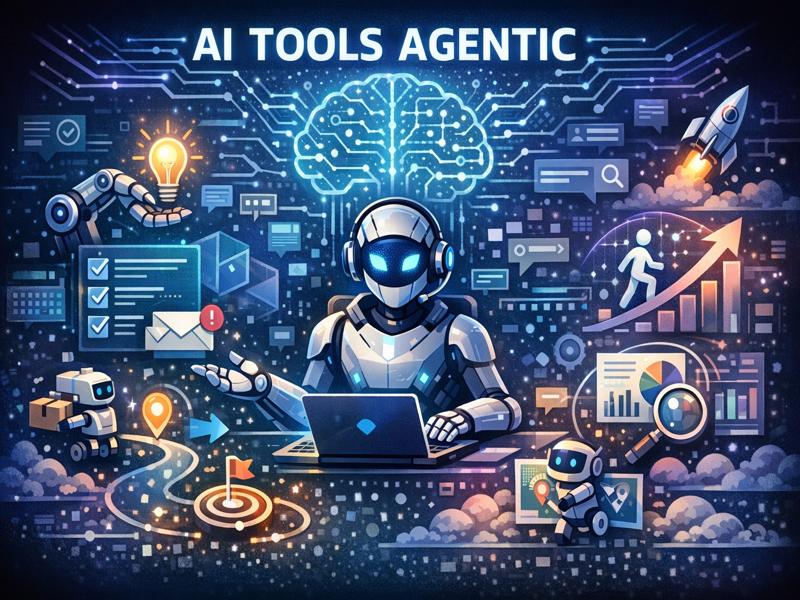
From 2023 to 2026, the biggest change has been the rise of agentic AI. Instead of only responding to a prompt, AI agents can complete multi-step tasks, use tools, follow instructions, retrieve information, and support decisions within workflows. This is where business transformation becomes more powerful. Companies are moving from using AI as a standalone assistant to embedding it inside automated systems that can process documents, update CRMs, generate reports, trigger actions, and support teams with far less manual effort.
Why Companies Are Investing in AI Right Now
One major reason companies are investing in AI today is cost reduction. Businesses everywhere are under pressure to do more with limited resources. AI helps reduce the time spent on repetitive administrative work, manual data entry, reporting, and routine communication. Instead of adding more headcount for every operational need, companies can use AI to increase output with the teams they already have.
Automation is another major driver. Businesses are recognizing that many daily processes are predictable, repeated, and rules-based enough to be partially or fully automated. AI makes that automation smarter. It can extract information from documents, classify requests, generate responses, summarize updates, and route tasks automatically. This reduces bottlenecks and improves consistency across departments.
Productivity is also a key factor. Teams are expected to move faster than ever, but speed often creates pressure and errors when everything is done manually. AI helps employees focus on higher-value work by handling the first layer of drafting, sorting, researching, or responding. Rather than replacing people, it often removes the parts of the job that consume time without creating much strategic value.
There is also strong competitive pressure. When one company starts using AI to deliver faster service, launch more content, qualify leads more efficiently, or generate insights in real time, competitors feel the difference. AI adoption is no longer just about internal efficiency. It is becoming a market expectation. Businesses that wait too long risk slower execution, higher operating costs, and weaker customer experiences compared with more agile competitors.
Where AI Creates Real Impact Across Business
In operations, AI creates real value by improving workflow automation, reporting automation, and document processing. Teams often lose hours every week moving information between systems, reviewing repetitive files, or building reports manually. AI can classify invoices, extract data from forms, summarize internal documents, and automate recurring reporting processes. This reduces delays and lets operations teams focus on improving the business instead of just maintaining it.
Marketing is another area where AI delivers immediate business impact. Content generation helps teams produce blog drafts, ad copy, email sequences, social captions, and campaign ideas much faster. SEO automation supports keyword clustering, content outlines, optimization suggestions, and content refresh workflows. AI can also improve ad performance by analyzing results, testing creative variations, and helping marketers make faster optimization decisions based on live data.
In sales, AI helps teams qualify leads, automate CRM updates, and improve follow-up consistency. Salespeople often spend too much time on admin instead of selling. AI can score incoming leads, summarize calls, generate follow-up messages, and update CRM records automatically. That means sales teams can focus more on closing deals and less on manual process work. It also improves pipeline visibility because information is captured more consistently.
Customer support is one of the clearest examples of practical AI transformation. AI chatbots can answer common questions instantly, guide users to the right resources, and escalate only the more complex cases to human agents. Ticket automation can categorize requests, draft responses, and prioritize issues based on urgency. The result is faster support, lower workload for service teams, and a better customer experience without increasing staffing at the same pace as demand.
How to Implement AI for Measurable Results
The best way to implement AI is to begin with repetitive processes. Step one is identifying tasks that happen frequently, follow a pattern, and consume valuable team time. These are usually the best opportunities for AI. Examples include report generation, content drafting, lead routing, inbox triage, support replies, document review, and CRM updates. Starting with these practical areas creates quick wins and reduces implementation risk.
Step two is mapping the workflow clearly. Before adding AI, a business should understand how the current process works, where information comes from, where decisions are made, and where delays happen. This step matters because AI performs best when it is inserted into a well-defined workflow. If the underlying process is unclear or broken, AI may only make the confusion happen faster.
Step three is applying the right mix of AI and automation tools. This is where platforms like n8n, ChatGPT, and Notion can become powerful together. n8n can connect apps and automate process flows across systems. ChatGPT can generate, summarize, classify, and support decision-making inside those flows. Notion can act as a knowledge base, documentation hub, or operational workspace where AI-assisted processes are managed. The goal is not to use every tool available, but to combine the right tools around a real business process.
Step four is measuring ROI from the beginning. Businesses should track saved hours, reduced manual workload, faster turnaround times, improved conversion rates, lower support volume, or better reporting accuracy. AI implementation should never be treated as vague innovation. It should be measured like any other business investment. If a workflow saves ten hours a week, improves lead response time, or reduces reporting effort by 70 percent, that is real transformation because the impact is visible and quantifiable.
Case Study Section
One strong example is an AI content automation system for marketing teams. A company can build a workflow where content ideas are collected in Notion, outlines are generated using ChatGPT, and publishing tasks are triggered automatically through n8n. This kind of system reduces bottlenecks in content production and allows a smaller team to maintain a higher publishing volume without sacrificing consistency. It is especially useful for businesses focused on SEO and inbound lead generation.
Another example is AI reporting automation using Power BI and AI-powered summaries. Many teams spend hours every week building dashboards, extracting updates, and writing explanations for stakeholders. By connecting reporting systems with AI, a business can automate the interpretation layer as well. Instead of only showing charts, the system can generate plain-language summaries, highlight anomalies, and prepare executive-ready updates. This makes reporting faster and more useful for decision-making.
For small and medium-sized businesses, AI workflow automation in operations can create major gains without requiring enterprise-level budgets. A service company, for example, can automate job intake, document handling, internal notifications, and follow-up tasks using tools like n8n and ChatGPT. This reduces manual coordination and helps the business run more smoothly even with a lean team. In many SMEs, the biggest value of AI is not complexity but operational clarity and time savings.
A particularly strong niche example is an AI system for car dealers. Dealerships deal with repetitive inquiries, lead follow-up, CRM updates, appointment scheduling, and vehicle information requests every day. An AI workflow can qualify incoming leads, answer common questions about inventory, schedule test drives, and push data into the CRM automatically. It can also help sales teams respond faster and more consistently, which directly impacts conversion rates. In this kind of environment, AI transformation is not abstract at all. It shows up in more booked appointments, less admin work, and higher sales efficiency.
AI transformation that delivers real business impact is not about chasing trends or adding technology for appearance. It is about improving business performance in practical, measurable ways. Companies that approach AI with clarity, starting from real workflow problems and clear ROI goals, are the ones seeing meaningful results.
The most successful businesses are using AI to automate repetitive work, strengthen team productivity, and create better customer experiences. They are not waiting for perfect conditions. They are starting with targeted use cases in operations, marketing, sales, and support, then expanding from there based on what works.
The opportunity is especially strong now because AI tools have become more capable, more accessible, and easier to connect with existing systems. Businesses no longer need to build everything from scratch. They can combine platforms, workflows, and AI models to create systems that solve real operational problems quickly.
In the end, real AI transformation is simple to define: less manual work, faster execution, better decisions, and measurable business outcomes. That is the standard that matters. And for companies willing to implement AI with discipline and purpose, the impact can be immediate and substantial.