2026 update: use this AI agent guide as part of a workflow stack
AI agent tools are useful only when the workflow is clear. Before using an agent manager, decide what the agent can access, where files are stored, how credentials are protected, and where human review is required.
Related Techmixer guides: AI Tools hub, no-code AI workflow automation tools, Portable USB Hermes AI Agent, and OpenClaw and PaperClip AI comparison.
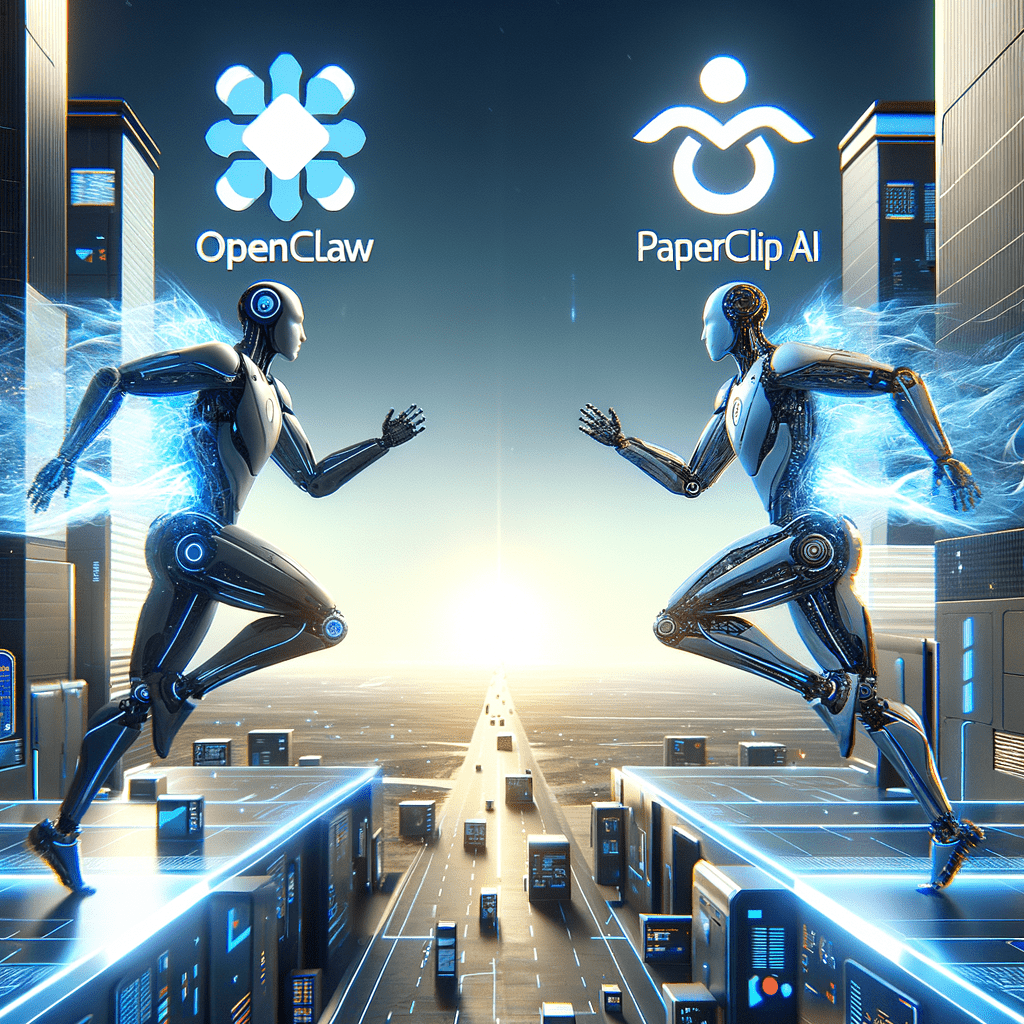
OpenClaw vs PaperClip: Which AI Agent Orchestration Platform Is Better?
In the ever-evolving world of artificial intelligence, the rise of intelligent agents and orchestration platforms is shaking things up. If you’ve been diving into AI agent frameworks or exploring AI orchestration tools, you’ve probably come across names like OpenClaw and PaperClip AI. Both promise to streamline how AI agents collaborate, adapt, and execute complex tasks, but which one actually delivers the goods? Let’s unpack what sets these AI agent orchestration platforms apart and where each shines — so you can decide which fits your project best.What’s the Deal with AI Agent Orchestration Anyway?
Before jumping into the OpenClaw vs PaperClip debate, it’s worth clarifying what AI agent orchestration means. Imagine you have several AI “workers,” each with unique talents—one’s a planner, another excels at language understanding, and yet another manages data input. AI orchestration platforms coordinate these agents, managing communication, task assignments, and workflow, much like a conductor leading an orchestra.This is where AI agent frameworks like OpenClaw and PaperClip come in, offering tools and structures to build, manage, and optimize these agent teams effortlessly. But as you’d expect, not all orchestration tools are built equally.OpenClaw: A Closer Look
OpenClaw markets itself as a flexible and powerful open-source AI agent orchestration platform. What catches the eye here is its focus on modularity and scalability.Why OpenClaw Might Click With You
- Modular Design: OpenClaw lets you build AI agents in bite-sized pieces, then connect them seamlessly. This modularity means you can swap or upgrade individual agents without revamping the entire system.
- Strong Community Support: Since it’s open-source, developers worldwide contribute plugins, bug fixes, and feature updates, making OpenClaw an evolving ecosystem.
- Flexibility in Customization: OpenClaw encourages tinkering. It supports multiple programming languages and AI model integrations, giving you freedom to tailor your agents to specific needs.
- Intuitive Agent Communication Protocols: OpenClaw uses clear messaging standards, reducing friction in agent-to-agent information sharing.
Real-world example
Imagine a customer support system that uses OpenClaw: one agent handles natural language understanding to parse a customer’s issue, another pulls relevant FAQ data, while a third recommends tailored solutions. OpenClaw’s architecture orchestrates these moving parts smoothly, ensuring the customer gets quick, accurate responses.But… What’s Not Perfect About OpenClaw?
OpenClaw’s learning curve can be a bit steep, especially if you’re new to agentic AI or orchestration tools. It demands some hands-on coding and setup time, which might be a slowdown in rapid prototyping scenarios.Introducing PaperClip AI: The New Kid on the Block?
PaperClip AI, by contrast, takes a slightly different approach. It markets itself as a user-friendly, plug-and-play AI agent orchestration tool that feels approachable for both beginners and teams seeking fast deployment.PaperClip AI’s Strengths
- User-Friendly Interface: PaperClip focuses on ease of use with drag-and-drop components and a visual workflow builder — no need to wrangle code in the early stages.
- Pre-built AI Agents: Comes loaded with ready-made agents for common tasks — chatbots, data analysis, and even content generation — saving you set-up time.
- Integrated Analytics: PaperClip offers built-in monitoring dashboards so you can keep track of each agent’s performance in real time.
- Cross-Platform Support: Works well on cloud and local environments, making it versatile for different deployment needs.
Scenario to Ponder
Think of a marketing team wanting to automate data aggregation, campaign drafting, and social media posting. PaperClip AI’s pre-built agents and visual orchestration mean even non-technical members can spearhead automation projects rapidly.What Might Hold PaperClip AI Back?
The trade-off for simplicity is sometimes less flexibility. PaperClip AI may feel limiting when you want to tinker deeply with your agent’s behaviors or integrate highly specialized AI models.Head-to-Head Comparison: OpenClaw vs PaperClip AI
To help you see the forest for the trees, here’s a quick comparison across key factors:| Feature | OpenClaw | PaperClip AI |
|---|---|---|
| Ease of Setup | Requires technical know-how; manual coding | Drag-and-drop, beginner-friendly UI |
| Customization | Highly customizable agents & workflows | Limited beyond pre-built agents |
| Community & Support | Large open-source community | Dedicated support with growing user base |
| Deployment Flexibility | Works well on multiple platforms, customizable environments | Cloud-friendly, easy local installs |
| Analytics & Monitoring | Basic monitoring tools, relies on third-party integrations | Robust built-in analytics dashboards |
| Ideal Use Case | Complex, scalable AI projects with technical teams | Quick automation for teams with limited coding experience |
When to Choose OpenClaw
If you’re the kind of developer or team who enjoys getting under the hood, tweaking every detail, and building AI agents tailored precisely to your needs, OpenClaw is a compelling pick. For startups or enterprises aiming to develop scalable, versatile AI workflows that might evolve rapidly, the modular design and open-source nature provide the flexibility you crave.Plus, if keeping costs down while harnessing community contributions matters, the open-source angle is tough to beat.When PaperClip AI Makes Sense
On the flip side, PaperClip AI is a winner – zero humanized company concept if time is tight and ease of use tops your list. Perhaps you’re a marketing lead or project manager looking to automate repetitive tasks without diving deep into code. PaperClip’s visual tools and pre-built agents make that possible.It’s also a great choice if you want instant insights through built-in analytics, helping your team keep an eye on performance without logging into separate platforms.The Verdict: Which AI Agent Framework Should You Pick?
Honestly, there’s no one-size-fits-all answer here. It boils down to your project’s complexity, your team’s technical skill, and how much control you want over your AI agent orchestration.- If you want power and customization, willing to invest time in setup and coding, OpenClaw is the clear choice.
- If you’re looking for speed and simplicity, and your tasks fit into common automation workflows, PaperClip AI might serve you better.
Final Thoughts: Embracing AI Agentic Platforms
The rise of AI agent orchestration tools like OpenClaw and PaperClip AI is transforming how companies harness AI’s power, making automation smarter, more collaborative, and adaptive. These platforms don’t just automate; they enable AI agents to think together.So, whether you’re an AI enthusiast or busy professional, exploring AI agent orchestration frameworks can open doors to efficiency you never imagined. And hey, in a space this dynamic, maybe it’s not just about which platform is better—but how you leverage their strengths to get the job done.Have you tried OpenClaw or PaperClip AI? What’s your experience been like? Drop your thoughts in the comments!
Keywords used naturally: OpenClaw, PaperClip AI, AI agent orchestration, AI agent framework, AI orchestration tools, AI Agentic
This article aims to help you make sense of the growing AI orchestration landscape, offering a human perspective on two leading platforms.
Related Techmixer hubs
Use these Techmixer hub pages to find updated guides, safer software notes, and related workflows.